


Businesses in ChatGPT: Business Hub and Agents (2026)

Businesses in ChatGPT: Business Hub and Agents (2026)
  • AI Guides

  • PowerfulAI.tools Editorial Team

  • 0 Comments

Businesses in ChatGPT: Business Hub and Agents (2026)

PowerfulAI.tools

PowerfulAI.tools Editorial Team
Updated 14 Nov 2026

By PowerfulAI.tools Editorial Team

Some links on this page are affiliate links. If you sign up through them we may earn a commission, at no extra cost to you.

ChatGPT logo

OpenAI has launched Businesses in ChatGPT, a beta that lets companies claim their business inside ChatGPT, keep their details up to date and see how people find them there. It was announced on 10 November 2026, alongside Business Agents: chat assistants that a business builds so customers can ask it questions inside ChatGPT. Here is what it includes, who can use it, and what it means for businesses and everyday users.

Introducing Businesses in ChatGPT

Image: OpenAI

What launched

Businesses in ChatGPT has three parts:

  • Business Hub, at chatgpt.com/business-hub, where a company claims its business, verifies it and manages its information.
  • Insights showing how people engage with the business in ChatGPT.
  • Business Agents, which let eligible businesses run their own assistant that customers can chat with from the business's ChatGPT profile.

OpenAI says ChatGPT is used by 1.2 billion people each week, and describes this launch as an early step in bringing businesses more deeply into ChatGPT.

Claiming your business

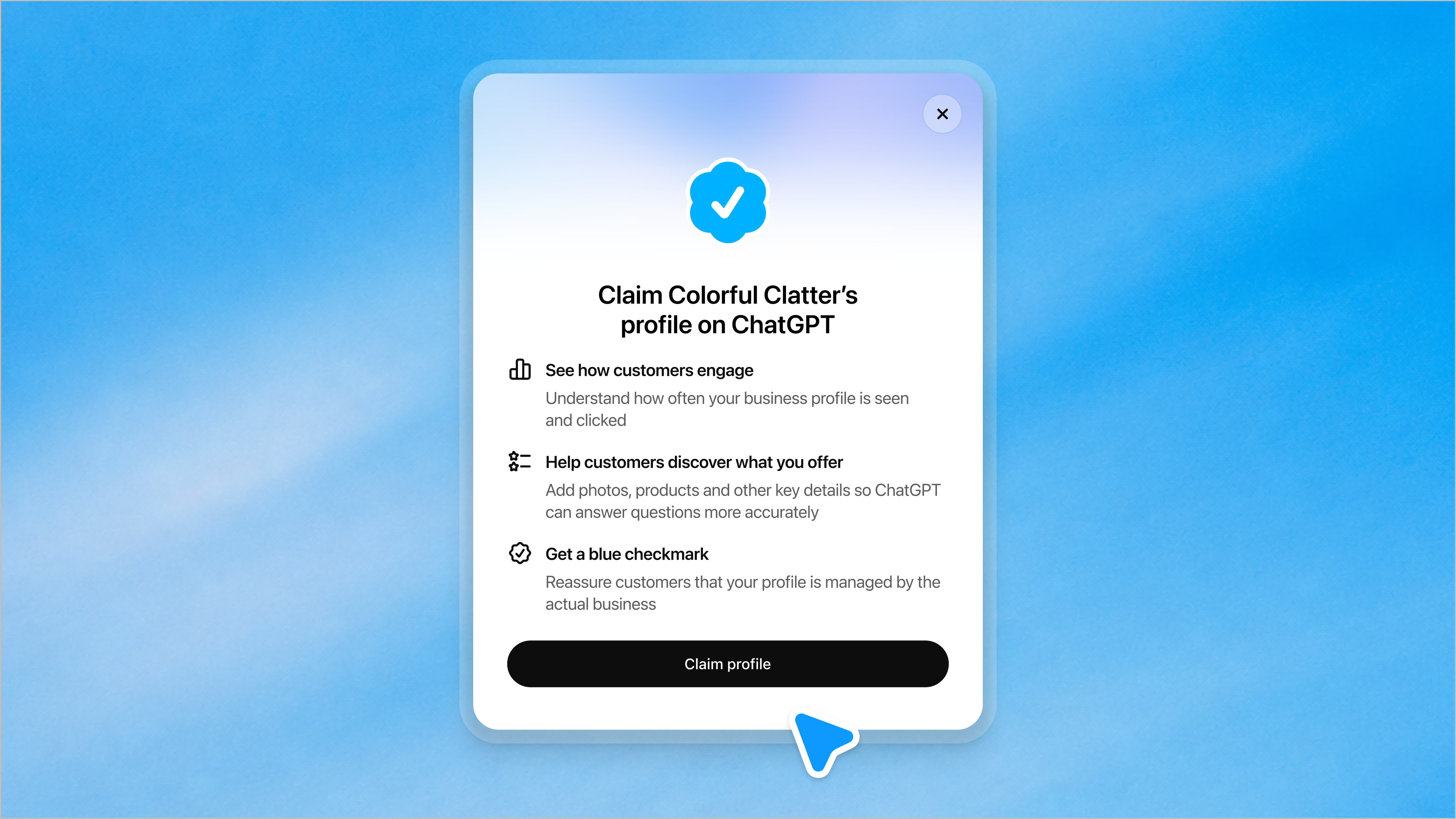
Once a business is verified in Business Hub, it can update key details and add self-service product feeds with pricing and availability. The aim is for ChatGPT to use accurate, current information when people explore products and services.

OpenAI says any eligible business located where ChatGPT is available can claim its business. Existing OpenAI Enterprise customers and advertisers can work through their OpenAI representative instead. Shopify merchants can connect their store from Business Hub or from the Shopify admin to make verification simpler, and eligible products from Shopify merchants are already in ChatGPT through Shopify Catalog.

A business profile claim screen in ChatGPT with business information and a Claim profile button

Image: OpenAI

What the insights show

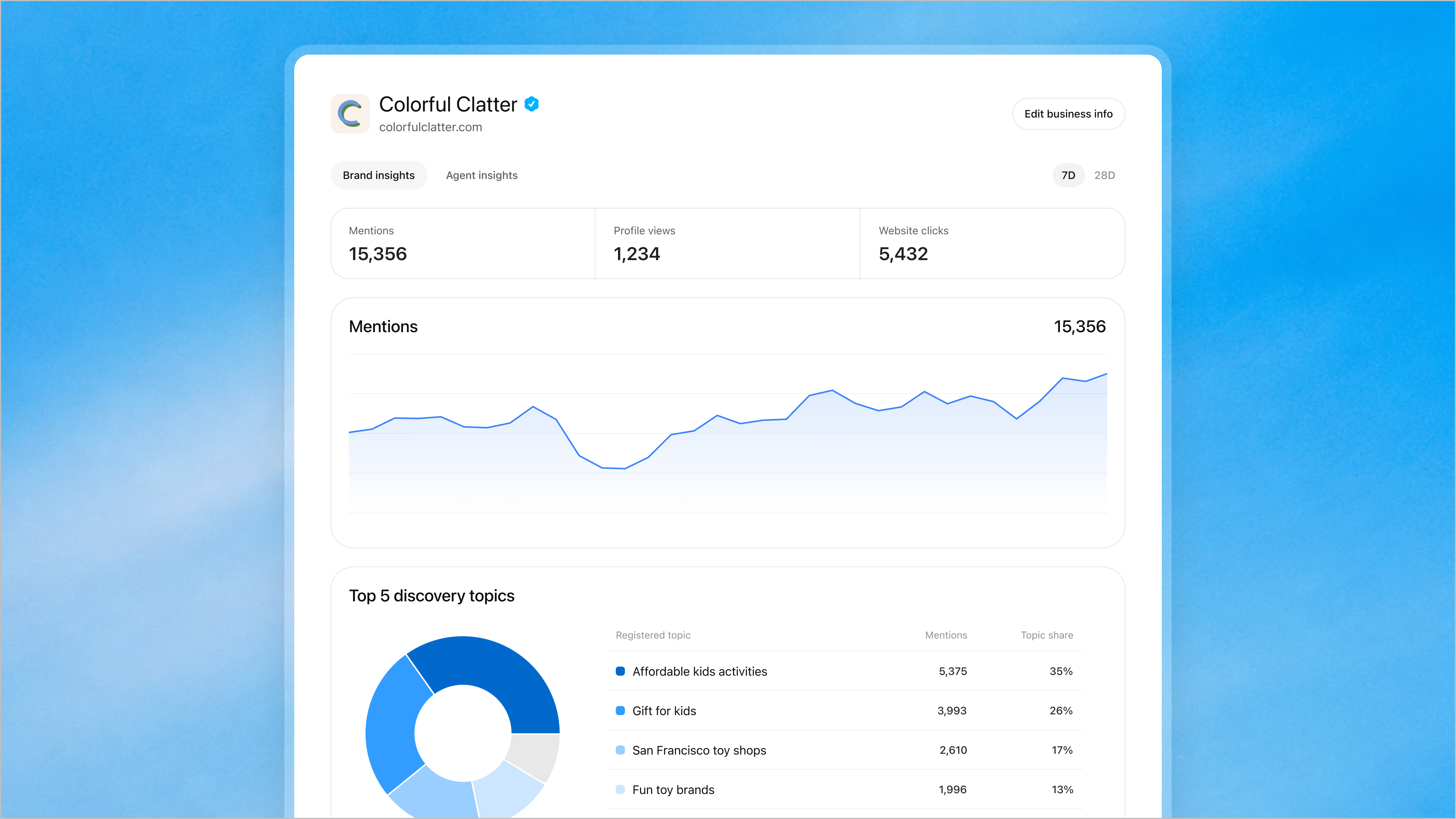
Business Hub gives aggregated figures on how people engage with a business in ChatGPT, including how many times it is mentioned and how many website clicks it gets. It also shows "discovery topics": common themes across conversations where the business's website is cited.

OpenAI says it does not share people's conversations or Business Agent chats with businesses. Insights are only shown once there are enough conversations or interactions to meet certain thresholds.

Business insights dashboard showing mentions, profile views, website clicks and top discovery topics

Image: OpenAI

How Business Agents work

After claiming its business, an eligible organisation can build, test and launch a Business Agent. When the business appears in a ChatGPT answer, people can open its ChatGPT profile, and if it has a Business Agent they can choose to start a conversation with it, for example to compare two products or ask which option fits their needs.

OpenAI says the Business Agent conversation is clearly labelled, kept separate from the person's original ChatGPT chat, and distinct from ChatGPT's own independent answers. Businesses can also sponsor their Business Agent and use it as the destination for ChatGPT Ads; sponsored placements are labelled and kept separate from ChatGPT's responses.

Who can use it and what it costs

Businesses in ChatGPT is in beta. Claiming a business is open to eligible businesses in places where ChatGPT is available, which includes Australia. Business Agents are only available to eligible ecommerce and online service businesses in the United States for now; OpenAI lists the eligible categories in its Business Agents policy and says it plans to expand to more markets and categories over time.

The announcement does not give a price for claiming a business or running a Business Agent. Sponsoring a Business Agent is part of ChatGPT Ads, which is a paid product. We will update this post if OpenAI publishes pricing.

What it means for businesses

More people now start their product research in AI assistants rather than a search engine. Claiming your business gives you a way to correct the details ChatGPT shows about you, add current prices and stock, and see whether you are being mentioned at all. The discovery topics can show which questions lead people to your site, which is useful when deciding what to put on your own pages.

If you sell on Shopify, check Business Hub or your Shopify admin first, as your products may already be in ChatGPT through Shopify Catalog.

What it means for everyday users

When you ask ChatGPT about products or services, the business details you see should become more accurate over time. If a business has an agent, you can ask it follow-up questions directly. Keep in mind that a Business Agent speaks for the business, not for ChatGPT: OpenAI labels these chats separately, and sponsored placements are marked, so look for those labels when you are comparing options.

Tools worth a look

  • Cody (Freemium): best for small and mid-sized businesses that want an AI assistant trained on their own documents for internal help desks or website visitors. Try Cody
  • Molin (Freemium): best for online shop owners who want an AI agent to handle product questions, order updates and lead capture around the clock. Try Molin
  • Ringly.io (Freemium): best for: Shopify store owners and ecommerce support teams who want routine customer phone calls such as order tracking and returns answered automatically. Try Ringly.io

How we checked

This post is based on OpenAI's official announcement, Introducing Businesses in ChatGPT (10 November 2026), its Business Agents policy and the Businesses in ChatGPT page, checked on 14 November 2026. Features and availability may change during the beta.

Leave a Comment

Comments

No more comments found